
A better plan starts with an honest conversation.
Your paycheck needs a plan, too
You can work a long week, bring home a decent paycheck, and still feel as though your money is headed somewhere without you. The bills get paid, something unexpected happens, and the plan to save moves to next month. After a while, that pattern begins to feel normal. It does not have to be the only way forward.
The Life Manual begins with a practical question: what do you want your money to make possible? A calmer home? A little breathing room when the truck needs a repair? More choices later in life? A better example for your children? Those are useful goals because they connect the numbers to a life you actually care about.
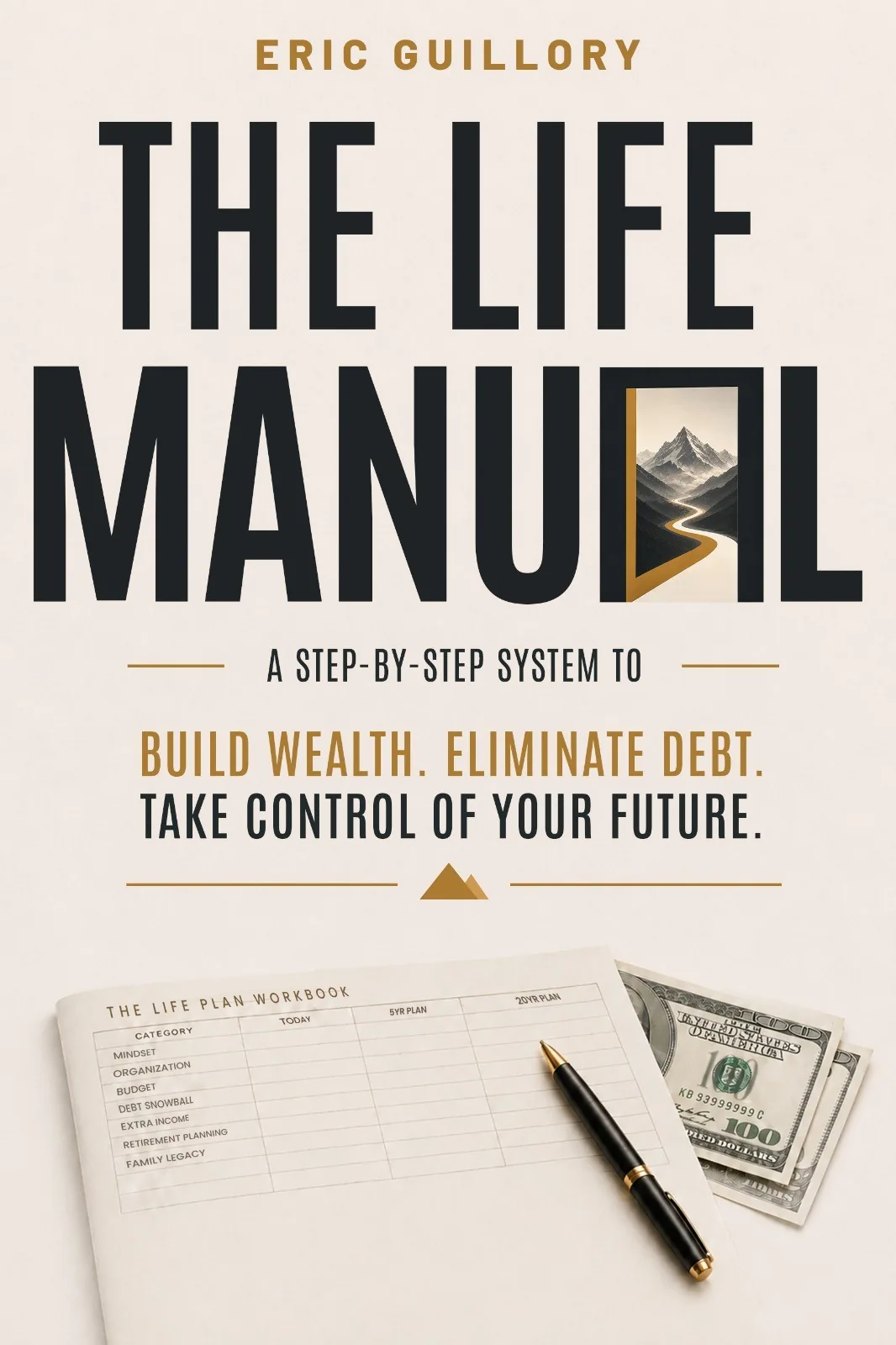
Eric Guillory wrote the book from the lessons he learned while building a career, running a business, raising a family, and planning his own future. He wants the information to feel understandable enough to use. You will find reflection questions, responsibilities, and space to turn an idea into something written down. The point is to move from a vague intention to a next step.
Start with the picture in front of you
Before you can choose a direction, you need a starting point. That does not require a perfect spreadsheet or an impressive income. It requires a clear look at what comes in, what goes out, what you owe, and what you have set aside. An uncomfortable number can still be a useful number. Once you can see it, you can begin deciding what to do about it.
Start with a month of take-home pay and the bills that keep your household running. Then include the expenses that arrive less often: a vehicle repair, a school cost, an insurance premium, or a holiday. Those costs can feel like surprises when they are missing from the plan. Giving them a place in the monthly picture makes the plan more realistic.
- Write down income you can reasonably count on.
- Separate essential bills from spending you can adjust.
- List debt balances, interest rates, and required payments.
- Identify cash that is available for a true emergency.
- Choose one change that gives the next month a little more room.
The cash flow planner can help organize that first look. You do not have to submit your financial details to use it. Change the numbers, explore the result, and decide which part of the picture deserves your attention first.
A buffer changes the way a hard month feels
A broken appliance is inconvenient. A broken appliance with no money available can affect the rest of the month. The expense may move onto a credit card, the next bill becomes harder to cover, and the pressure carries forward. An emergency cushion cannot prevent every problem, but it can give you more room to respond.
Eric’s manuscript makes preparation a recurring theme. Start with a milestone you can work toward, then think about a fuller reserve based on essential expenses and the risks in your household. Someone with unpredictable income may think about their cushion differently from a household with several reliable earners. Dependents, health needs, and the condition of a home or vehicle also matter.
The useful question is not whether your first savings amount looks impressive. It is whether you know what the money is for, where it belongs, and how you will build it. The emergency fund tool turns a chosen coverage period into a target and a timeline. You can revise either as your circumstances change.

Debt deserves a clear decision
Debt can make it difficult to see progress because part of tomorrow’s income already has an assignment. A payment may look manageable on its own while several payments together leave very little flexibility. That is why the book asks readers to look at the whole picture rather than focusing only on an individual monthly bill.
There are different ways to organize a payoff plan. A snowball approach prioritizes smaller balances after minimum payments; an avalanche approach prioritizes the highest interest rate. One emphasizes visible wins, while the other focuses on the cost of borrowing. Your rates, balances, payment budget, and ability to keep going all deserve a place in the conversation.
Our debt payoff calculator lets you compare those approaches with the same monthly budget. It keeps the assumptions visible and rolls available payment money toward the remaining balances. Use the comparison to understand the tradeoff. Then use your actual statements and lender terms to work through the details of a real plan.
Time belongs in the conversation
When you are handling today’s expenses, a future goal can feel distant. Yet the amount you put aside, the time available, and the way money grows or loses buying power are connected. A calculator makes that relationship easier to see. A small recurring contribution has one result over a few years and a very different hypothetical result over several decades.
Those illustrations need honest assumptions. A projected investment return is not a promise. Markets change, fees and taxes can affect outcomes, and an investment can lose value. A higher number typed into a return field makes a bigger projection; it does not make that outcome more likely. The value of the exercise is understanding the relationship, not choosing the most exciting answer.
Explore several scenarios in the compound growth tool. Try a lower return, a smaller contribution, or a shorter time period. Then look at how much of the final balance comes from your own deposits. That comparison can help turn a long-term goal into a more concrete discussion about habits and priorities.
Your life is larger than a balance
One of the most human ideas in Eric’s book is that money serves a purpose beyond the account itself. He writes about family, character, responsibility, and having options. A financial plan has more meaning when it supports the relationships and commitments that matter to you. The destination should be yours, rather than a number borrowed from someone else’s life.
That might mean planning for a different work schedule, helping a child get a better start, or knowing how the household would manage if income changed. It might mean being able to say yes to something important without creating a new problem afterward. Writing those goals down helps you make choices with a clearer reason behind them.
The book’s questions are meant to be revisited. A young adult choosing a career will have a different set of decisions from a parent supporting a household or an older adult reviewing retirement income. A useful roadmap can develop with you. It gives you a way to ask better questions when the circumstances change.
Bring the conversation to the people who need it
Some lessons land differently when people can ask questions, compare examples, and connect the material to their stage of life. That is the purpose behind Eric’s speaking and teaching direction. The book provides a foundation; a live conversation gives a group a chance to work through the ideas together.
For students, that conversation may begin with a first paycheck, the cost of a decision, and the difference between a job and a longer-term direction. For employees, it may focus on cash flow, emergency preparation, and understanding where to start. For community and older-adult groups, the right discussion may be about keeping the plan understandable and preparing better questions for qualified professionals.
If you organize a program, start with the people in the room and the one thing you want them to leave understanding. The speaking pages explain the audience paths, and the inquiry form gives you a place to describe your event. A date request begins a conversation; it does not confirm a booking or commit you to a fee.
Choose one useful next move
You do not need to solve every financial question in one sitting. Read a chapter of the book, try one calculator, or write down the part of your financial picture you have been avoiding. Small actions become more useful when they have a purpose and a place in a repeatable routine.
If you are reading with a spouse, a friend, or an older child, talk about what the next step would look like in your own household. Keep the conversation specific. A clear bill list, a first savings milestone, or a scheduled check-in is easier to act on than a general promise to do better. Start there, review what happens, and keep the roadmap moving with your life.